

Science & technology
The technology
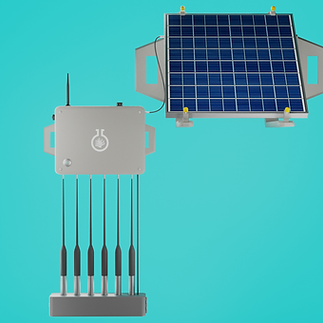

Our monitoring system utilises specialised water sensors to track dissolved CO₂ and various water pollutants, including copper (Cu²⁺), zinc (Zn²⁺), nitrate (NO₃⁻), phosphate (PO₄³⁻), ammonia (NH₃), and ammonium (NH₄⁺). To enhance the accuracy of CO₂ monitoring, atmospheric sensors are also integrated. Additionally, the system can be customised to monitor algae performance indicators, such as CO₂ absorption. All data are collected and displayed in real time via our online monitoring platform, enabling ports to continuously oversee the air and water quality within their facilities.
The science behind our algae
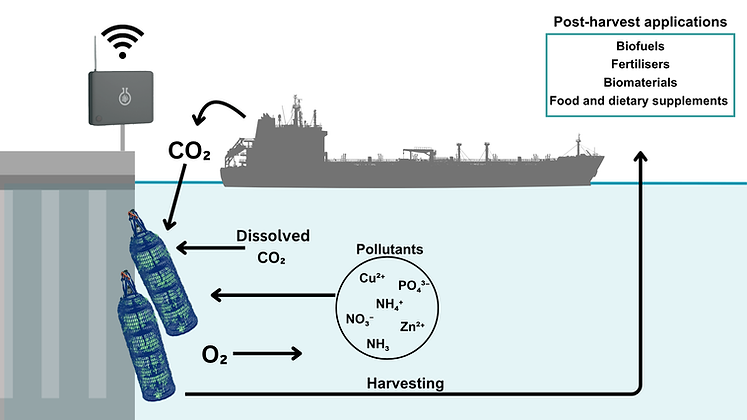
Our algae are grown in specialised structures attached to harbour walls or buoys, where they capture CO₂ from shipping emissions and release oxygen through photosynthesis. They also remove water pollutants like copper (Cu²⁺), zinc (Zn²⁺), nitrate (NO₃⁻), phosphate (PO₄³⁻), ammonia (NH₃), and ammonium (NH₄⁺), which come from vessels, port operations, urban and industrial runoff and atmospheric deposition. Our innovative monitoring system tracks the algae’s performance and identifies the best time for harvesting. Once harvested, the algae can produce biofuels and fertilisers, contributing to environmental sustainability.
Innovative cultivation structure
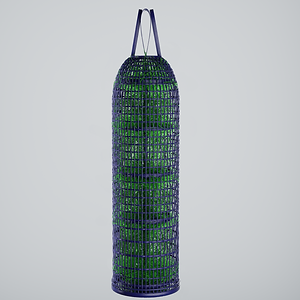
We developed a specialised structure for growing algae, making it easier to harvest them when ready. This design also minimises the risk of algae spreading within the port, ensuring marine traffic remains unaffected.
High-efficiency algae for CO₂ and pollutant removal
Our algae system excels at absorbing CO₂ and pollutants faster than most algae species or plants. During the day, our algae absorb CO₂ from both the atmosphere and water, converting it into oxygen through photosynthesis, thereby helping to reduce CO₂ levels. At night, the algae perform cellular respiration, releasing small amounts of CO₂ and absorbing oxygen (equal to 1% - 5%), but in much lower quantities than during the day. Additionally, our algae absorb various pollutants, effectively purifying the water. When fully grown, these algae can be harvested for uses such as biofuels and fertilisers, adding further value to their environmental role.

Supported by research
At BioBright, we take pride in offering a product that is not only innovative but also backed by extensive research. Our products are designed to help reduce carbon emissions for your company as efficiently and quickly as possible. Our commitment to delivering a reliable and effective solution has led us to provide tailored ways for your company to reduce its carbon emissions.
